Split to Supetar Ferry: How Boarding Actually Works in 2027
The Split to Supetar ferry is the front door to Brač.
Jadrolinija‘s line 631 runs it all year, in both directions, from 5 in the morning until a minute before midnight — 12 sailings a day each way outside summer, 14 a day from June to September. The crossing takes 50 minutes, an adult pays €6.50, a standard car €26.10, and the price does not move between August and November: this is one of the few Dalmatian lines with a single tariff all year.
The one rule that catches people out is that your ticket is not a reservation. It is valid for any sailing on the date printed on it, and cars board strictly in the order they arrive at the port. Everything on this page follows from those two facts.
There is also a fast passenger catamaran (Krilo) between the same two harbours — about 25 minutes, €10, foot passengers only. It is covered at the end of this page.
*Prices and times checked November 2026.
Quick facts
| Route | Split ↔ Supetar (island of Brač) |
| Operator | Jadrolinija (state ferry line 631) |
| Crossing time | 50 minutes |
| Distance | About 13 km (less than 10 nautical miles) across the Brač Channel |
| Sailings | 12 a day each way (Oct–May), 14 a day each way (Jun–Sep) |
| First / last boat | First 05:00 both ways; last from Split 23:59, last from Supetar 22:45 |
| Adult foot passenger | €6.50 one way, same all year |
| Car (up to 5 m) | €26.10 one way, plus a passenger ticket for everyone in it |
| Reservations | None. Ticket valid any sailing on its date; boarding is first come, first served |
| Also on the route | Krilo fast catamaran, foot passengers only, ~25 minutes, €10 |
Timetables
The Split to Supetar ferry timetable comes in three periods, but there are really two rhythms: the summer timetable (1 June – 30 September, 14 sailings a day) and the rest of the year (12 sailings a day). The January–May and October–December timetables show identical times; only the footnotes on the early boats differ. Jadrolinija’s own PDF timetable and price list, published on their website, are the only valid source — everything here is checked against them, and if the two ever differ, the PDF wins.
Low season — 1 October to 31 May (12 sailings a day)
| From Split | From Supetar |
|---|---|
| 05:00 * | 05:00 * |
| 06:15 | 06:15 |
| 07:30 | 07:45 |
| 09:00 | 09:00 |
| 11:00 | 10:30 |
| 12:30 | 12:30 |
| 14:15 | 14:30 |
| 16:30 | 15:30 |
| 18:15 | 18:00 |
| 19:30 | 19:30 |
| 21:00 | 20:45 |
| 23:59 ** | 22:45 ** |
* January–May: the 05:00 does not sail on Saturdays, Sundays or public holidays until 30 March, and the 06:15 does not sail on Sundays or public holidays until 30 March. October–December: the 05:00 does not sail on Sundays or public holidays in October, and not on Saturdays, Sundays or public holidays from 1 November.
** The 23:59 from Split and the 22:45 from Supetar do not sail on 24, 25 or 31 December.
High season — 1 June to 30 September (14 sailings a day)
| From Split | From Supetar |
|---|---|
| 05:00 | 05:00 |
| 06:15 | 06:30 |
| 08:00 | 07:45 |
| 09:00 | 09:30 |
| 10:30 | 11:00 |
| 12:00 | 12:15 |
| 14:15 | 14:00 |
| 15:00 | 15:30 |
| 15:45 | 16:30 |
| 17:00 | 17:15 |
| 18:00 | 18:30 |
| 19:30 | 19:30 |
| 21:00 | 20:45 |
| 23:59 | 22:45 |
In high season every sailing runs every day — there is no reduced Sunday version. The boats run roughly hourly through the middle of the day, with a tighter shuttle pattern in the afternoon.
Prices (2026, one way)
The Split to Supetar ferry has a single tariff for the whole year — the price in the table is the price in January and in August, in both directions. VAT and port charges are already included. The 2027 price list had not been published as of November 2026.
Ticket Price
| Adult | €6.50 |
| Child, 3–12 years | €3.20 |
| Child under 3 | Free |
| Bicycle | €6.20 |
| Motorcycle / moped | €12.90 |
| Motorcycle with sidecar, tricycle or quad | €17.60 |
| Car up to 5 m long and 2 m high | €26.10 |
| Car over 5 m long or over 2 m high | €40.30 |
| Caravan or camper up to 5 m | €42.90 |
| Caravan or camper 5–7 m | €52.50 |
| Caravan or camper over 7 m | €67.10 |
| Luggage trailer up to 3 m | €16.40 |
| Luggage trailer 3–5 m | €26.10 |
| Luggage trailer over 5 m | €42.90 |
Two things to get right:
- The car fare is for the vehicle only. The driver and every passenger also need a passenger ticket. Two adults taking a car across pay 2 × €6.50 + €26.10 = €39.10 one way. A family with two children aged 3–12 pays €45.50.
- Size is measured on length and height together. A car with a roof box that pushes it over 2 m high moves into the €40.30 band even if it is under 5 m long.
Island residents with a Croatian island card (otočna iskaznica) pay the reduced island tariff — €2.40 per adult and €10.90 for a car up to 5 m — but that card is issued only to islanders.
Tickets: where to buy and what the ticket actually gives you
Buy in whichever way suits you — the price is the same everywhere:
- Online at Jadrolinija’s web shop (shop.jadrolinija.hr) — for a vehicle ticket you will need the vehicle registration details.
- The mJadrolinija app — same shop, and the handiest place to check for disruption notices on the day.
- At the port — Jadrolinija sales points in the Split passenger terminal and in Supetar, plus Jadrolinija agencies in town. Tickets are not sold on board (exception is if the port office is closed).
What the ticket gives you is a right to travel on that date, not a place on a specific boat. There is no departure time on it and no way to reserve one. If you miss the sailing you aimed for, the same ticket simply works on the next one — no rebooking, no fee. If you change your mind entirely, tickets can be cancelled within their validity for a 10% fee.
Frequent crossers use the Jadrolinija2Go prepaid card (the card itself costs €2.65, top-ups from €13.27): on a no-reservation line like this one you board by scanning the card, which skips the ticket queue altogether.
Foot passengers can treat the timetable as a rhythm rather than an appointment. The big ferries on this line carry up to around 1,200 passengers, so the people left standing on the quay in August are almost never the ones on foot — they are the ones in cars. Which brings us to the part that matters.
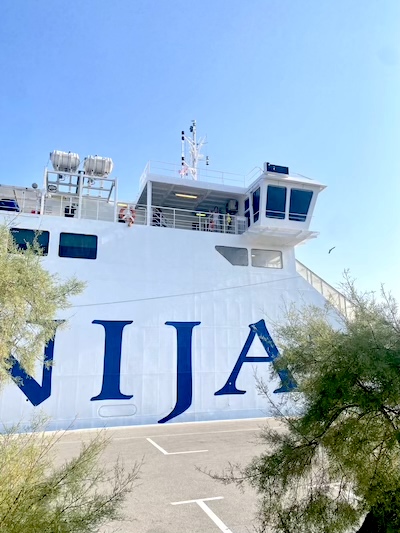
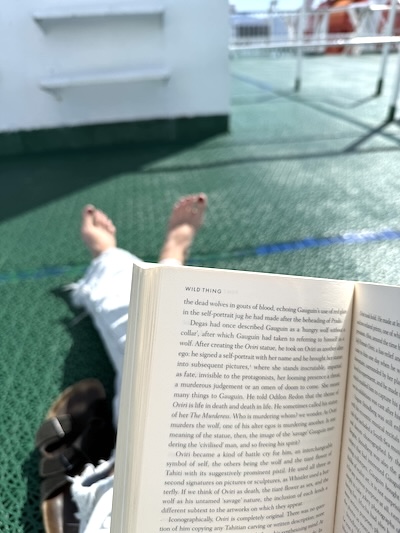
Boarding, step by step
On foot
- In Split, go into the passenger terminal on Gat Sv. Duje, at the eastern end of the Riva. Check the departure board for your berth — the Supetar ferries load at berths 20, 23 and 24, and the berth changes from sailing to sailing, so never assume yesterday’s pier.
- Have the ticket on your phone or printed. It is checked as you board, not at a gate.
- Boarding starts about 30 minutes before departure; be on board by 15 minutes before. In practice the walk from the terminal door to sitting down with a coffee takes five minutes.
- In Supetar it is simpler still: the ferry docks in the middle of town and you walk straight off into it.
Finding the ticket booths in Split: don’t look for a grand ticket hall. The Jadrolinija and Krilo ticket offices by the port are small old booths — Yugoslav-era kiosks — standing by the port road near Gat Sv. Duje, turned away from the main road and facing the sea. Even a local can walk straight past them the first time; look for the company signs above the booths. The ferry port has also been under construction since last year, which makes an already busy port harder to read — follow the temporary signs and give yourself a few extra minutes.
With a car
- Follow the signs for “Trajekt / Ferry” into the port and join the lane signed for Supetar. Lanes are organised by destination, and port staff direct the loading.
- Your ticket is checked in the lane or at the ramp. Keep the registration document handy if you bought at the port.
- Timing is everything. Outside summer, 30–45 minutes before your sailing is comfortable. In July and August — and on Friday afternoons out of Split and Sunday afternoons back — follow Jadrolinija’s own advice for lines without reservations and be there one to two hours ahead of the sailing you want. If the car deck fills, you simply wait for the next boat; your ticket stays valid all day.
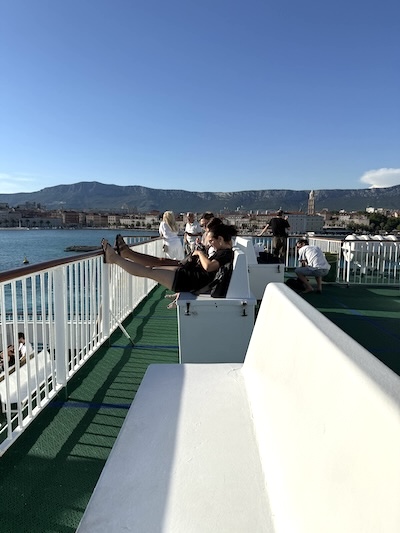
- Once parked on deck, take everything you need and go up. Nobody stays in the car during the crossing and the car deck is closed underway. Medication, documents, the dog’s lead, the kids’ snacks — carry them up with you.
- Priority exists, but not for tourists: ambulances and other emergency vehicles, scheduled buses and vehicles carrying basic food supplies load out of turn.
The return from Supetar works the same way, on a smaller stage: one queue forming along the port approach, the same first-come rule, and noticeably less pressure outside the Sunday-evening homeward rush and weekday mornings, when half the island seems to be commuting to school and work in Split.
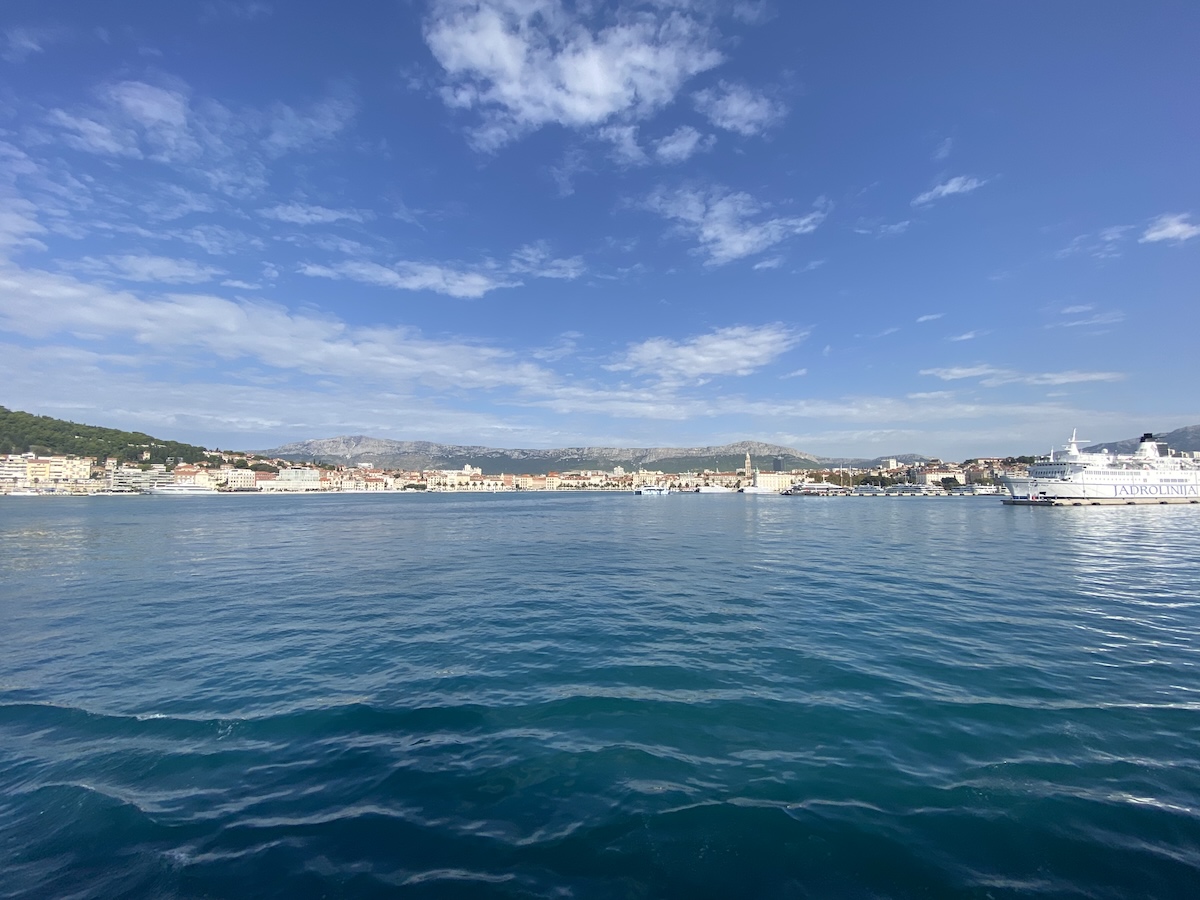
Split Ferry Port
– Trajektna luka Split
Split’s ferry port sits at the eastern end of the Riva, on Gat Sv. Duje — which means the transport map of the city converges on exactly the spot you need:
- Main bus station (Autobusni kolodvor) is immediately beside the port, and the train station is right next to it. Step off a bus from anywhere in Croatia and you are a two-minute walk from the ticket desks.
- The Old Town is a short stroll west along the waterfront — Diocletian’s Palace is roughly 10 minutes on foot from the berths. If you are staying in the centre, you do not need transport to the ferry; you need a rolling suitcase and ten minutes.
- From Split Airport (about 25 km): the airport shuttle bus (Platanus) leaves roughly 30 minutes after each flight lands and runs straight to the main bus station beside the port in about 30–40 minutes, for around €8–10. A taxi runs €30–50 depending on traffic; Uber and Bolt are usually €20–40. The city bus 37 is the cheap option (a few euro) but it ends at Sukoišan, a 15–20 minute walk from the port — only worth it with time to spare.
- Parking: the port’s own parking areas are for vehicles boarding ferries, not for leaving a car all day. Street parking in Zone I near the Old Town is €1.20 an hour in summer (€0.80 in winter) on Split Parking’s tariff. The straight answer for most visitors: if you have a car, take it across (€26.10) — Brač is an island you explore by road. If you are crossing on foot for the day, leave the car in a city garage rather than circling the port — the handiest is Garaža Firule (Spinčićeva 2B, east of the Old Town): open around the clock, €2 an hour or €25 for a full day, and about a 15-minute walk back to the berths. The city lots right by the port charge by the hour with no daily cap, and a full day on the Riva lot costs far more. Picking up a rental for the island instead? See Renting a Car in Split.
The terminal building has the Jadrolinija ticket offices, waiting areas, toilets, cafés and luggage storage, with more cafés along the Riva in both directions. In summer the area in front of the terminal is a slow river of suitcases — allow the extra minutes rather than sprinting for a boat that, remember, your ticket does not hold.
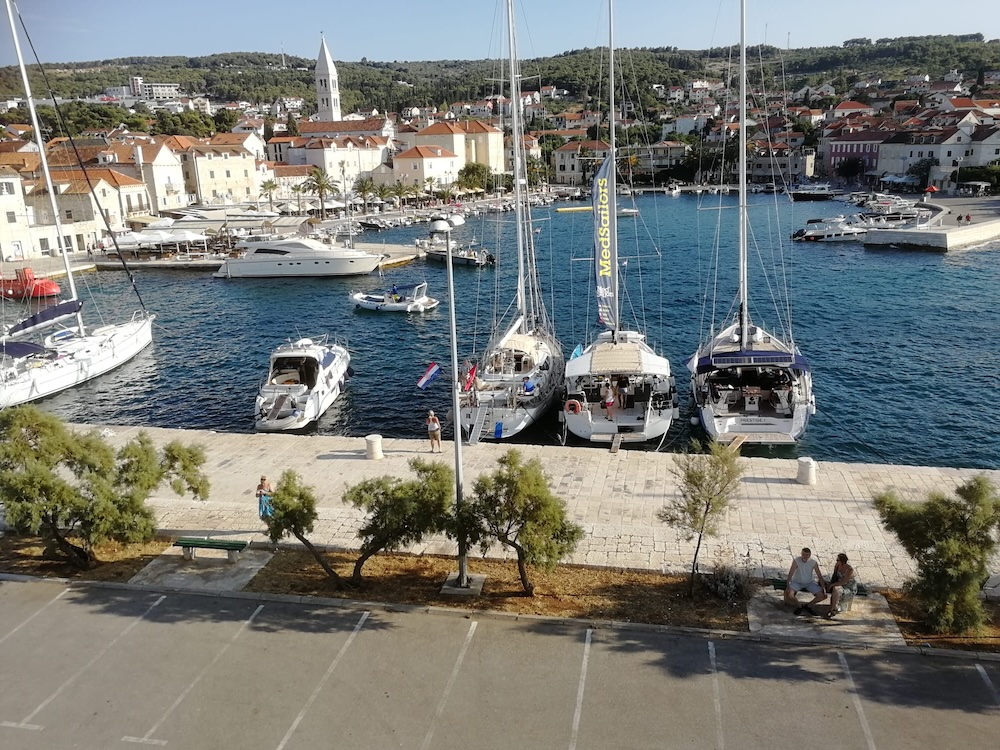
Supetar Ferry Port
– Trajektna luka Supetar
The ferry slides into Supetar’s harbour right in the centre of town — this is the friendliest arrival on the Dalmatian coast. There is no terminal to escape from: you walk off the ramp and you are on the waterfront, with the old town’s lanes, cafés and the parish church a two- or three-minute walk away.
- Buses across Brač leave from the little bus station (Autobusna stanica Luka) right by the port. Arriva runs the island network from here: to Bol on the south coast it is about 38 km, 45–50 minutes over the island’s spine, for around €6.30, with several departures a day (up to ten a day in summer, fewer in winter — check the day’s timetable before you sail, because a missed connection can mean a long wait). Buses also run to Sutivan and Milna in the west, and east to Postira, Pučišća and Sumartin.
- Taxis wait at the port for ferry arrivals — and the keenest drivers, the ones standing right in front of the ferry touting for passengers, are the ones to walk past. Look instead for the drivers sitting in their cars behind them, or ask at the ferry port ticket office who to take. Agree the price before you get in; in summer, pre-booking a transfer beats hoping.
- Beaches start almost immediately: the town beaches of Banj and the Vela Luka bay are a few minutes’ walk west of the port, so a day trip can be ferry, swim, lunch, ferry without touching a bus timetable. The first beach is literally right outside the ferry port — close enough that you can come over on a ferry, take a quick swim, and hop back on the same boat while it unloads and loads its cars; even in high summer the turnaround leaves you time.
- The Jadrolinija sales point in Supetar handles tickets for the way back if you crossed without a return — remember tickets are one-way and date-specific, so buy the return when you know your day.
The fast alternative: Krilo catamaran
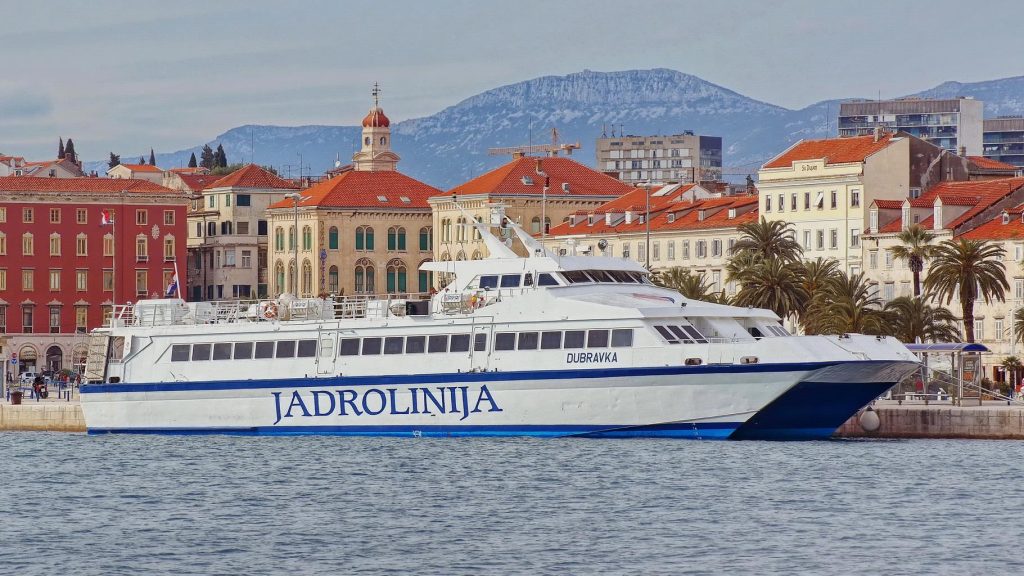
If you are on foot and in a hurry, the Split to Supetar ferry is not your only option: Kapetan Luka’s Krilo catamaran runs between the same two harbours in about 25 minutes for €10 one way, the same price all year. It takes no cars and no bicycles, and unlike the ferry it sells tickets for a specific departure — in peak weeks the popular sailings fill, so book it like a train, not like a ferry.
The line only started in 2025, which makes it the new way across — and a very convenient one.
In winter (November–December 2026) it runs four to five times a day:
from Split at 06:25 (Monday–Saturday), 08:30 (Sunday), 12:00, 14:30 and 17:00;
from Supetar at 07:00 (Monday–Saturday), 09:30 (Sunday), 12:45, 15:15 and 17:45.
In summer 2026 it ran seven times a day each way.
It uses a different berth in Split from the car ferries — check the departure boards when you arrive at the port.
You can also book Krilo through Ferryhopper, which sells the crossing with e-tickets and online check-in — handy, though Ferryhopper does not sell the Jadrolinija car ferry.
Practical extras
Luggage. There is no check-in and no luggage carousel mentality here: 20 kg of hand luggage per person is included in the passenger ticket, you carry it on and keep it with you, and bags in or on your vehicle travel with the vehicle. The ferries usually have conveyor stairs at one side for getting bags up — but they are often not working. Do what the locals do: watch where they leave the heavy stuff down in the car area, and leave yours there too. Croatia is a safe country, and on the ferries unattended bags are simply part of the furniture — islanders routinely put unaccompanied things on the boat for someone to pick up at the other end, and theft on board is unheard of.
Dogs and other pets. Pets travel free on the car ferry. Dogs must be on a lead and muzzled (assistance dogs excepted) and ride on the open deck or stay in the car — pets are not allowed in the enclosed passenger saloons on the car ferry. The small-pet carrier rule — up to 8 kg in a carrier no larger than 45 × 35 × 25 cm, travelling in the saloon — applies on the Krilo catamaran, not on line 631. On a 50-minute crossing with a big open deck, most dogs treat it as the best part of the holiday.
Bicycles. A bicycle has its own ticket (€6.20) and is walked on and off like a pedestrian with luggage — one of the easiest ways to do Brač, since Supetar’s waterfront path runs straight out of the port. Note the Krilo catamaran does not carry bicycles; cyclists need line 631.
Accessibility. The big double-ended ferries load vehicles and foot passengers at deck level, and the main saloons are reached without stairs on the usual vessels; crew will help with boarding if you ask at the ticket desk or the ramp. Holders of a Croatian disability card travel on the privileged tariff — the card must be with you and shown at boarding. Assistance dogs travel free and are the exception to both the muzzle rule and the saloon ban. Facilities vary between the ships that rotate onto the line, so if step-free access or an accessible toilet is essential, check with Jadrolinija (+385 72 30 33 37) on the day.
On board. Fifty minutes buys you: a café-bar, indoor saloon seating, toilets, and a large open deck that is the real point of the crossing — Split falling away behind you, the Brač Channel, and Supetar’s rooftops growing ahead. There is no restaurant and no cabin classes; there is sea air, the seagulls and, if you time it for the 19:30 or the last boat in summer, a sunset that makes the €6.50 feel underpriced. The vessels rotate, but the regular on the line is the Hrvat (built 2006, 1,200 passengers, 138 cars).
Weather and the bura. The crossing is short and the channel is partly sheltered, so line 631 is one of the last services in the Split area to stop for weather — the catamarans always go first. That said, a hard winter bura (the gusty north-easterly) or a strong jugo can suspend even the car ferries, and Jadrolinija posts suspensions on its website and in the app, usually with a few hours’ notice.
When a storm shut down a long list of Dalmatian lines on 13 November 2026, the Supetar ferries were not on it — but if the forecast is shouting, check before you set off, and in the shoulder season leave yourself a buffer sailing rather than planning around the last boat. And if you know you feel a rough crossing, take a motion-sickness pill before a bura day — the channel is short, but a hard north-easterly can make it lively. HAK’s live port cameras show the Split ferry port as it is right now — worth a glance on a busy August morning.
If you miss the last ferry. From Split, the last boat is the 23:59 (not running 24, 25 and 31 December); from Supetar it is the 22:45. Miss it and the honest options are a bed where you are and the first morning boat (05:00 on weekdays, 06:15 at weekends in winter) — or a private water taxi across the channel. Treat that as a luxury, not a fallback: there is no fixed tariff from the Riva, the price is agreed before you step aboard — and for scale, a boat taxi between Supetar and Split Airport is published at €260 per boat for up to five passengers. There is no night service and no bridge: Brač stays an island after midnight.
Day-trip maths. The timetable is built for day trips in both directions: out of Split at 09:00, you are swimming in Supetar before 10:00; the 21:00 or 23:59 home gives you dinner on the island first. Coming the other way, Brač residents do the same in reverse — which is why the first boats of the day are quietly full of islanders with somewhere to be. If Brač is one stop on a longer Split stay, the 7 best day trips from Split puts this crossing in context.

FAQ
Can I reserve a seat or a car space on the Split–Supetar ferry?
No. Line 631 has no reservations at all. Your ticket is valid for any sailing on the date printed on it, and boarding — for cars above all — is in order of arrival at the port.
How much is the ferry from Split to Supetar?
In 2026: €6.50 for an adult, €3.20 for a child aged 3–12 (under-3s free), €26.10 for a car up to 5 m long and 2 m high, €12.90 for a motorcycle and €6.20 for a bicycle, one way. The tariff is the same all year and in both directions, with VAT and port fees included. Prices checked November 2026; the 2027 price list was not yet published. The full breakdown, vehicle by vehicle, is in the price table above.
How early should I arrive with a car?
In July and August, and on Friday and Sunday afternoons, follow Jadrolinija’s advice for lines without reservations: one to two hours before the sailing you want. The rest of the year, 30–45 minutes is comfortable. On foot, 15–30 minutes is plenty at any time of year.
Can foot passengers always get on?
In practice, yes. The ferries carry up to about 1,200 passengers and foot travellers are not the bottleneck on this line — car deck space is. If a sailing is going to leave anyone behind, it leaves cars.
How long does the Split to Supetar ferry take?
50 minutes, port to port. Add five minutes to walk off in Supetar and you are in the centre of town.
Is there a faster way to Supetar?
Yes — the Krilo catamaran, about 25 minutes and €10, foot passengers only, with tickets sold for a specific departure. There is no faster way with a car.
Can I take my dog on the ferry?
Yes, and pets travel free on the car ferry. Dogs need a lead and a muzzle and ride on the open deck or in your car — pets are not allowed in the enclosed saloons. On the Krilo catamaran, small pets (up to 8 kg) travel in the saloon in a carrier no larger than 45 × 35 × 25 cm.
What happens if the ferry is cancelled for weather?
Jadrolinija announces suspensions on its website and in the mJadrolinija app. Your date ticket works on the next sailing that runs; if you abandon the trip, tickets can be cancelled within their validity for a 10% fee.
Does the ferry run on Sundays and in winter?
Yes — every day of the year. Outside summer there are 12 sailings a day (11 on winter weekends, when the 05:00 does not run), and 14 a day from June to September.